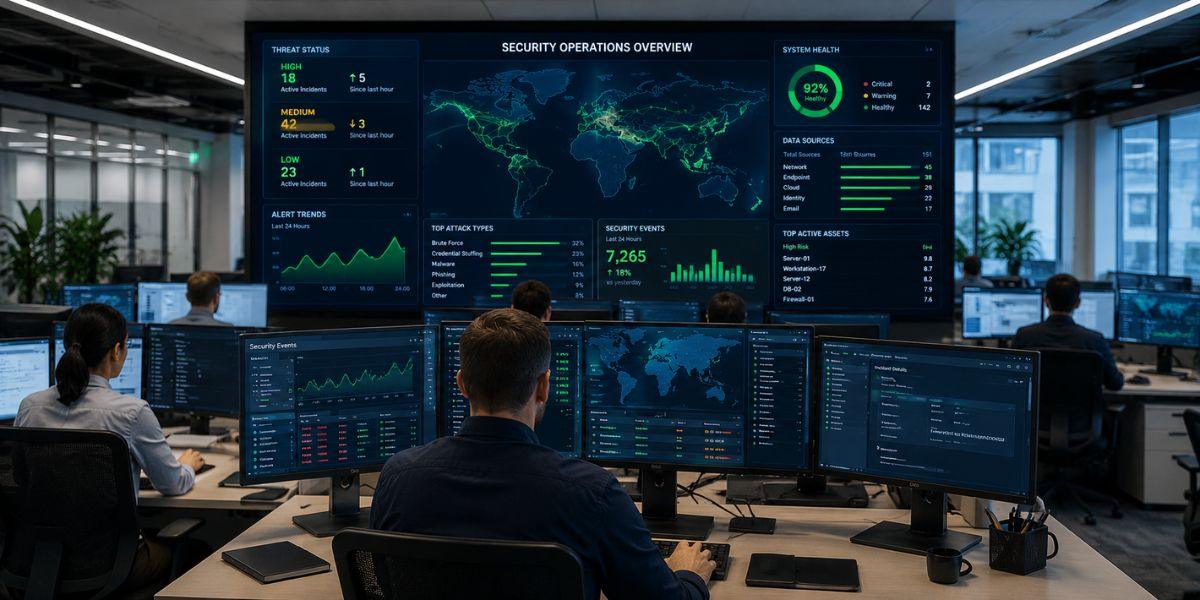
Most businesses today are not lacking cybersecurity tools.
They have endpoint protection, firewalls, MFA, cloud security apps, email filtering, vulnerability scanners, backup systems, and compliance platforms. On paper, the environment looks protected.
Yet breaches still happen.
The issue usually is not that businesses have too few tools. It is that their systems are disconnected, alerts are isolated, and response workflows are unclear.
This is where SOC monitoring changes the conversation.
A modern security operations center is not just another cybersecurity product layered onto an already crowded environment. It is the operational layer that connects systems, centralizes visibility, and turns fragmented alerts into coordinated threat detection and response.
The Real Problem: Cybersecurity Tool Sprawl
Over the last several years, businesses have adopted more cybersecurity products than ever before. In many environments, every new threat results in another platform being added to the stack.
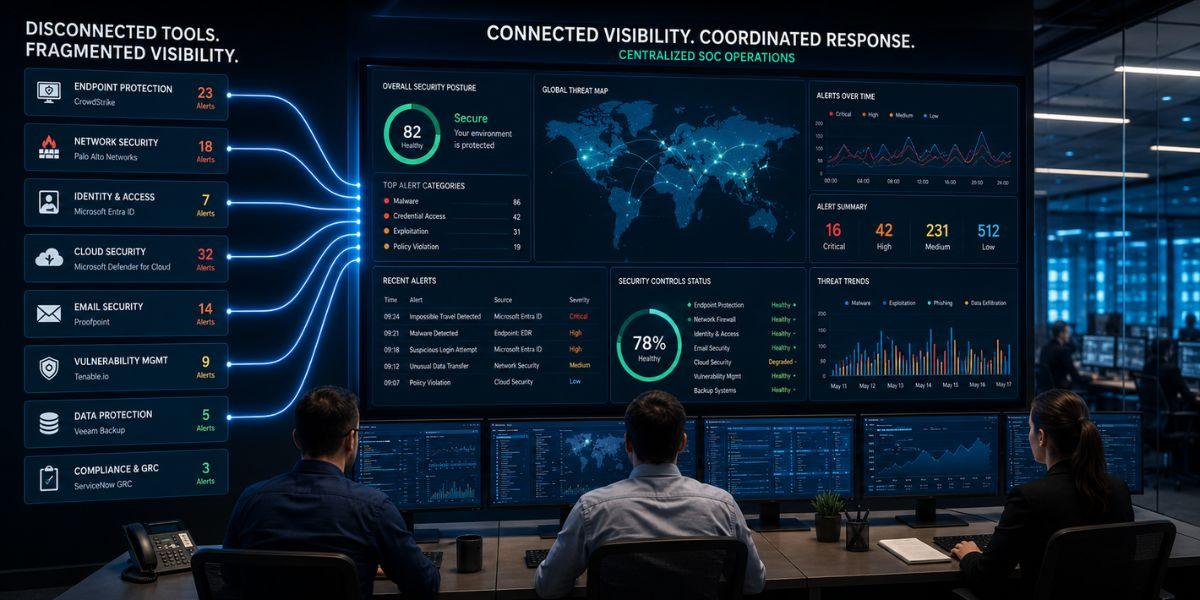
The problem is that most of these tools operate independently.
One platform detects suspicious login attempts. Another flags endpoint behavior. A third identifies vulnerabilities. A fourth generates compliance reports.
But if those systems are not connected, correlated, and actively monitored, critical warning signs can easily be missed.
Research from IBM and Palo Alto Networks found that the average organization now manages 83 security tools from 29 vendors, creating significant operational complexity and slower response times.
This creates several major challenges:
- Alert fatigue from duplicate or low-priority notifications
- Limited visibility across cloud, endpoint, and network environments
- Delayed escalation between IT and security teams
- Gaps in ownership during active incidents
- Slower containment and remediation
- Difficulty proving compliance and security accountability
Many organizations assume they are protected because they invested heavily in cybersecurity tools. In reality, disconnected systems often create blind spots that attackers exploit.
Why Visibility Alone Is Not Enough
Many cybersecurity platforms are designed to generate alerts. Far fewer are designed to coordinate action. This is one of the biggest misunderstandings in IT security management today. A dashboard full of alerts does not automatically reduce risk.
If no one is correlating events across systems, validating threats, prioritizing incidents, and executing response workflows, security gaps remain open. That is why SOC monitoring is not simply about watching logs.
It is about creating operational alignment between detection, escalation, investigation, containment, and remediation. At CorCystems, our approach to SOC and SIEM Monitoring focuses on proactive visibility combined with coordinated action. Security monitoring only becomes valuable when it is connected to real response processes and accountability.
The Cost of Disconnected Security Operations
Disconnected cybersecurity environments do not just increase risk. They also increase response time.
According to IBM’s 2025 Cost of a Data Breach Report, organizations still take an average of 241 days to identify and contain a breach. That delay is rarely caused by a complete lack of security tools.
More often, the issue is:
- Security alerts were buried in noise
- Critical systems were not integrated
- Teams were unclear on escalation ownership
- Threats were detected but not validated quickly enough
- Data existed in silos without centralized analysis
This is exactly why modern cybersecurity operations require centralized monitoring and coordinated workflows. Without integration, businesses end up managing security in fragments instead of operating from a unified security strategy.

SOC Monitoring Is About Coordination, Not Just Detection
A true security operations center acts as the connective tissue across the entire cybersecurity environment.
Instead of viewing alerts in isolation, SOC monitoring correlates activity across:
- Firewalls
- Endpoint protection platforms
- Cloud applications
- Microsoft 365 environments
- Identity and access systems
- Backup infrastructure
- Network traffic
- Vulnerability management platforms
- Compliance systems
This unified approach dramatically improves threat detection and response because analysts can see patterns instead of isolated events.
For example, a suspicious login by itself may not seem critical. But when paired with impossible travel activity, privilege escalation, endpoint anomalies, and unusual outbound traffic, the situation becomes far more serious. Disconnected tools may never connect those dots. An integrated SOC process can. This is why businesses are increasingly moving away from fragmented cybersecurity management toward centralized security operations.

Cybersecurity Tools Integration Creates Operational Clarity
One of the biggest benefits of cybersecurity tools integration is operational clarity.
When systems communicate properly, businesses gain:
Centralized Visibility
Security teams can view threats across the environment instead of switching between disconnected dashboards.
Faster Incident Response
Automated escalation and coordinated workflows reduce investigation time.
Reduced Alert Fatigue
Correlated alerts help eliminate duplicate noise and prioritize real threats.
Better Accountability
Clear ownership improves remediation and follow-through.
Stronger Compliance Readiness
Integrated monitoring simplifies audit trails, reporting, and security validation.
At CorCystems, we often see organizations with solid cybersecurity investments that still struggle operationally because their tools were implemented independently without unified oversight.
That is why cybersecurity and compliance services should never focus only on products. They must also focus on operational integration, visibility, and response maturity.

Why SOC Monitoring Supports Proactive IT Security Management
Modern IT security management is no longer just about prevention.
Attackers regularly bypass traditional defenses through:
- Credential theft
- Social engineering
- MFA fatigue attacks
- Cloud account compromise
- Third-party access abuse
- Insider threats
Because prevention alone is not enough, businesses must focus on continuous monitoring and rapid response. This is why 24/7 SOC monitoring has become critical. Threat actors do not operate only during business hours. A suspicious login at 2:00 AM may be the first sign of an active compromise. Without coordinated monitoring, businesses may not discover the issue until the next workday or later.
After-hours threats frequently bypass traditional monitoring approaches, so coordinated response workflows are critical to containment speed. This proactive operational model aligns closely with broader 24/7 monitoring and support services, where the goal is not simply reacting to problems but identifying and addressing them before they escalate.
Your Security Stack May Not Need Replacement
Many businesses assume their cybersecurity environment is failing because they need newer technology. Often, the bigger issue is that their current systems were never designed to operate together. Disconnected security environments create fragmented visibility, unclear ownership, delayed response, and operational blind spots.
SOC monitoring helps bridge those gaps by connecting detection, analysis, escalation, and response into a unified operational process. The result is a more proactive, coordinated, and resilient cybersecurity posture.
If your organization is struggling with alert fatigue, visibility gaps, or disconnected cybersecurity tools, it may be time to evaluate whether your environment is truly operating as a unified security operation.
Learn how CorCystems helps businesses improve threat detection and response through integrated SOC monitoring services and proactive IT security management strategies.