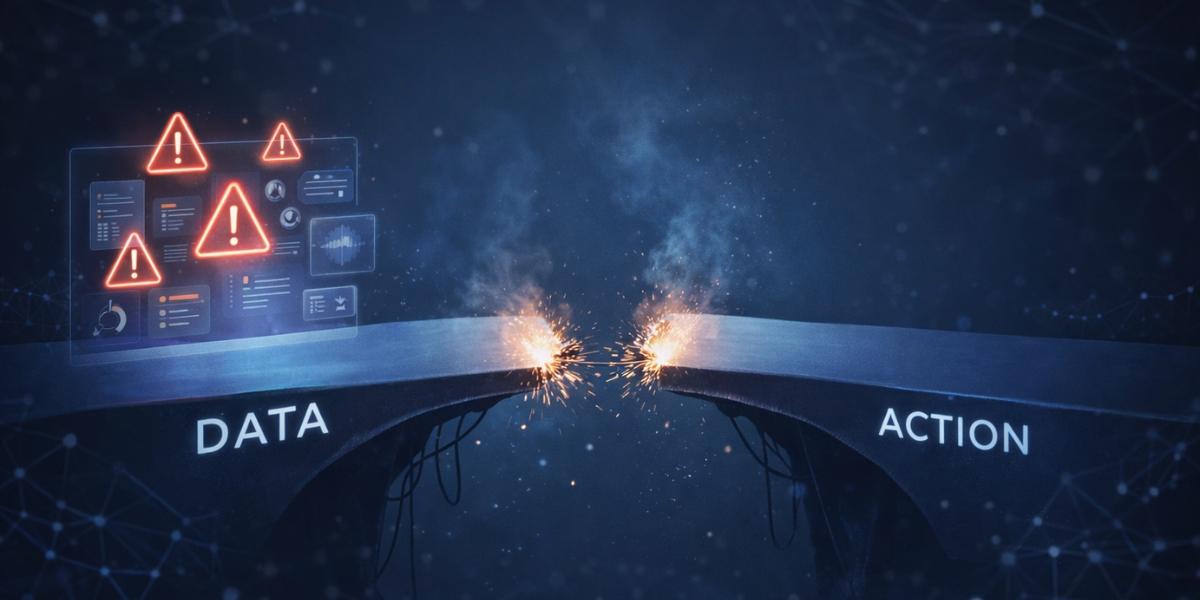
Strategic IT planning often gets treated like a yearly checkbox. You sit down during budgeting season, map out projects, approve spending, and move on. It feels structured, and it feels responsible.
But that approach breaks down quickly.
Your business does not stand still for twelve months. Priorities shift. Risks change. New tools enter the picture. Costs move. According to a 2025 report by Flexera, 89% of U.S. organizations said managing cloud and IT costs is a top challenge, yet many still rely on static planning cycles that limit their ability to adjust spending in real time.
If your IT strategic plan stays fixed while everything else moves, it stops guiding decisions. It starts creating problems instead.
What most organizations call a plan is often just a snapshot in time. And snapshots don’t help you steer a moving business.

Strategic IT Planning Isn’t a One-Time Exercise
A static plan assumes your environment will behave predictably. That assumption is wrong.
Your business evolves throughout the year. You hire new people, expand locations, and adopt new systems. At the same time, vendors change pricing, threats increase, and compliance requirements shift without warning.
If your strategic IT planning only happens once a year, every decision you make after that point becomes reactive. You are no longer following a strategy. You are adjusting on the fly without a clear direction.
That leads to misalignment. Your IT investments stop matching your actual business priorities, teams make decisions in isolation, and leadership loses visibility.
Strategic IT planning only works when it reflects your current reality. Not last quarter, not last year, but right now.

What Happens Without Ongoing Strategic IT Planning
When strategic IT planning is not continuous, the effects show up everywhere. Not all at once, but consistently.
1. Reactive Spending Takes Over
A system fails, so you replace it quickly. A security concern comes up, so you buy a tool without a full evaluation. Costs increase, but you cannot clearly explain why.
2. Decisions Become Fragmented Across Teams
Marketing adopts one platform. Operations chooses another. Finance works around both. Instead of alignment, you get disconnected systems and workflows.
3. Security Gaps Grow Quietly
Without regular review, outdated systems and weak controls stay in place longer than they should. You only notice them after an issue surfaces.
4. Projects Lose Direction
What made sense six months ago may no longer support your current goals. Work continues anyway because no one has reset priorities.
5. Leadership Loses Clarity
You get reports, but not clear insight. You see costs, but not outcomes. You hear updates, but not strategy.
The absence of strategic IT planning is not neutral. It creates hidden costs, risks, and confusion.
What Strategic IT Planning Actually Involves
A real IT strategic plan is not a document you create and store. It is a working process that guides decisions throughout the year.
1. Continuous Budget Alignment
You regularly review spending, compare it to business priorities, and adjust where needed. This prevents both overspending and underinvestment.
2. Ongoing Risk Assessment
Security threats do not wait for your next annual review. You need regular check-ins to identify new risks and address them before they escalate.
3. Active Compliance Tracking
Requirements change. Standards evolve. Without continuous tracking, you fall behind without realizing it.
4. Technology Lifecycle Management
Systems age. Vendors update products. Contracts expire. You need a clear view of what needs to be replaced, upgraded, or consolidated.
5. Alignment With Business Initiatives
Growth plans, hiring goals, expansion efforts, and operational changes should all influence your IT decisions.
This is not a theory. It is an operational discipline. It requires consistent attention and clear ownership.

Why Static IT Plans Fail in a Dynamic Business Environment
A static IT strategic plan fails because it assumes stability.
Your business priorities can shift within months. A new client segment may require different tools. A hiring surge may strain your current infrastructure. A new service offering may demand new systems.
External factors move just as quickly. Security threats evolve constantly. Compliance requirements change mid-year. Vendors adjust pricing or discontinue products. Even internal improvements can disrupt a static plan. As your team becomes more capable or your processes improve, your IT needs change with them.
When your plan does not evolve, it becomes disconnected from reality. Decisions based on that plan no longer support your business effectively. At that point, the plan is not just outdated. It is misleading.

Where Most Businesses Get Stuck
Most organizations do not ignore strategic IT planning. They struggle to maintain it. Here are a few of the ways businesses fail at:
- Lack Of Clear Ownership – No one clearly owns the IT strategic plan. Internal IT teams focus on operations. Leadership focuses on business outcomes. Strategy falls into a gap between them.
- Over-Reliance On Tools – Companies invest in platforms and systems, expecting them to solve problems on their own. Tools support execution, but they do not provide direction.
- Fragmented Decision-Making – Different teams make choices based on immediate needs, not long-term alignment. This leads to inconsistent systems and missed efficiency opportunities.
- Limited Visibility Into Costs And Risks – You may know what you are spending, but not how it connects to value, risk, or future needs.
This is where many businesses begin to look at vCIO strategy services. Not as an extra layer, but as a way to bring structure and accountability to an area that often lacks both.
How vCIO Strategy Services Create Ongoing Alignment
vCIO strategy services introduce consistency into strategic IT planning.
Instead of treating planning as an annual event, they establish a regular cadence. Monthly or quarterly reviews keep the strategy aligned with current conditions. They translate business changes into IT adjustments. If your company shifts direction, your IT priorities shift with it. This keeps your IT strategic plan relevant.
They also provide clear visibility. You get a better understanding of costs, risks, and performance. That allows you to make informed decisions instead of reactive ones.
Accountability improves as well. Plans are not just created. They are tracked, reviewed, and adjusted. For companies without dedicated IT leadership at the strategic level, this fills a critical gap. For those with internal teams, it strengthens alignment and support.

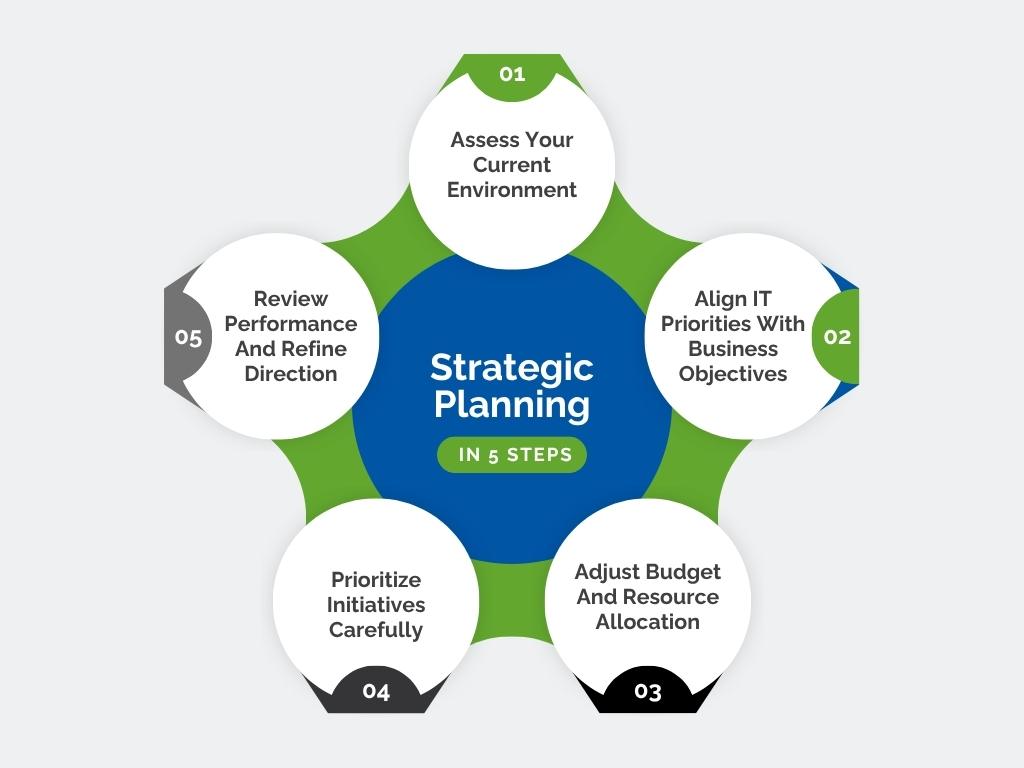
A Practical Framework for Continuous Strategic IT Planning
You do not need a complex model to improve your strategic IT planning. You need a consistent cycle.
Step 1: Assess Your Current Environment
Understand your systems, risks, costs, and limitations. This gives you a clear baseline.
Step 2: Align IT Priorities With Business Objectives
If your focus is growth, your IT investments should support scalability. If your focus is efficiency, your IT should reduce friction and improve workflows.
Step 3: Adjust Budget And Resource Allocation
Ensure your spending reflects your priorities, not outdated assumptions.
Step 4: Prioritize Initiatives Carefully
Not everything needs to happen at once. Focus on what delivers the most value or reduces the most risk.
Step 5: Review Performance And Refine Direction
Look at what is working, what is not, and what needs to change.
Then repeat the cycle. Strategic IT planning is not a milestone. It is a loop that keeps your technology aligned with your business.
Keep Your IT Strategy Aligned With Where Your Business Is Going
Strategic IT planning works best when it stays connected to how your business actually operates. When your priorities shift, your IT direction should shift with them. That is how you avoid wasted spend, reduce risk, and keep your team moving in the same direction.
If you want a clearer view of where your IT strategy stands today and where it should go next, consider starting with a conversation. Book a strategic appointment with CorCystems to walk through your current environment and identify practical next steps that align with your business goals.